

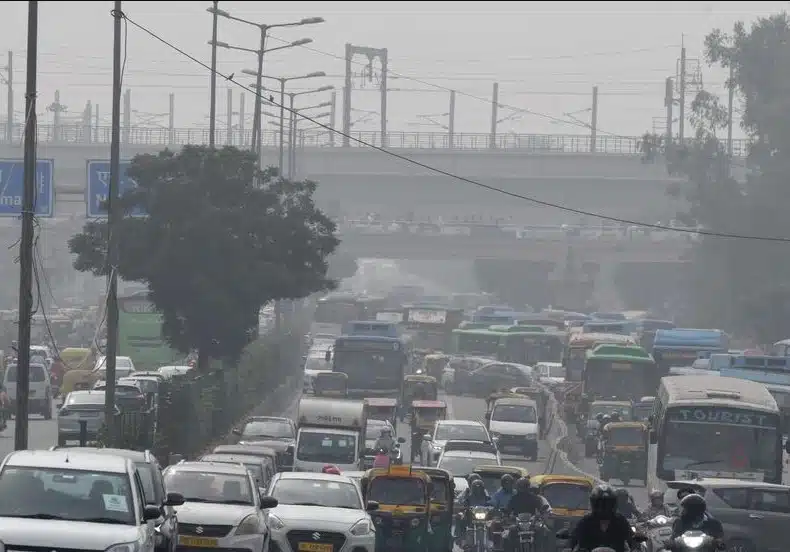
Even as farm fires decline, Delhi-NCR’s winter air remains dangerously polluted, raising concerns about public health and environmental policy. A new analysis by the Centre for Science and Environment (CSE) highlights how vehicular emissions and local sources, rather than stubble burning, are now the main contributors to the city’s daily spikes in air pollution.
Stubble Burning at Multi-Year Lows
This year, farm fires in Punjab and Haryana were significantly reduced, partly due to floods that disrupted the crop cycle. Traditionally, post-harvest stubble burning has been blamed for Delhi’s hazardous winter air. However, despite a decline in agricultural fires, the capital’s air quality index (AQI) remained in the ‘very poor’ to ‘severe’ range throughout October and November 2025.
Experts say this indicates a shift in pollution sources, with local emissions increasingly dominating the winter smog.
Vehicles and Local Sources Fueling Pollution
The CSE study emphasizes that a “toxic cocktail” of PM2.5, nitrogen dioxide (NO₂), and carbon monoxide (CO) is primarily emitted by vehicles, construction activities, and other urban sources. These pollutants accumulate in the cold winter months due to temperature inversion, which traps polluted air close to the ground.
“Even with minimal stubble burning, the city’s air continues to be hazardous because of persistent local sources like traffic, road dust, and domestic heating,” said a CSE spokesperson.
Carbon Monoxide Levels Reach Dangerous Thresholds
The analysis tracked air quality across 22 monitoring stations in Delhi and found CO levels exceeded permissible limits on over 30 of 59 days assessed. The worst-affected locations were:
- Dwarka Sector 8: 55 days above limits
- Jahangirpuri: 50 days
- Delhi University North Campus: 50 days
High CO levels, largely produced by vehicular exhaust, highlight how traffic congestion contributes more to daily pollution peaks than crop fires.
Health Risks and Public Concern
PM2.5, NO₂, and CO are associated with serious respiratory and cardiovascular health risks, especially for vulnerable populations such as children, the elderly, and those with pre-existing conditions. Medical experts warn that sustained exposure to Delhi’s winter smog can exacerbate asthma, bronchitis, and heart disease, while long-term exposure may increase the risk of chronic illnesses.
The city’s recurring winter smog has prompted calls for stronger action on vehicular emissions, construction dust, and industrial pollution, in addition to continuing measures against stubble burning.
Policy Implications
The findings suggest that while efforts to curb stubble burning remain important, policymakers must address urban pollution sources to achieve meaningful improvements in air quality. Measures such as:
- Strict emission standards for vehicles
- Efficient public transport systems
- Dust suppression at construction sites
- Regulation of industrial emissions
…could collectively help reduce Delhi’s toxic winter smog.
Conclusion
The CSE study underscores a clear message: traffic and local urban emissions, not stubble burning, are driving daily pollution spikes in Delhi-NCR. Without urgent intervention, the city is likely to continue facing severe air quality crises every winter, affecting millions of residents’ health and quality of life.