

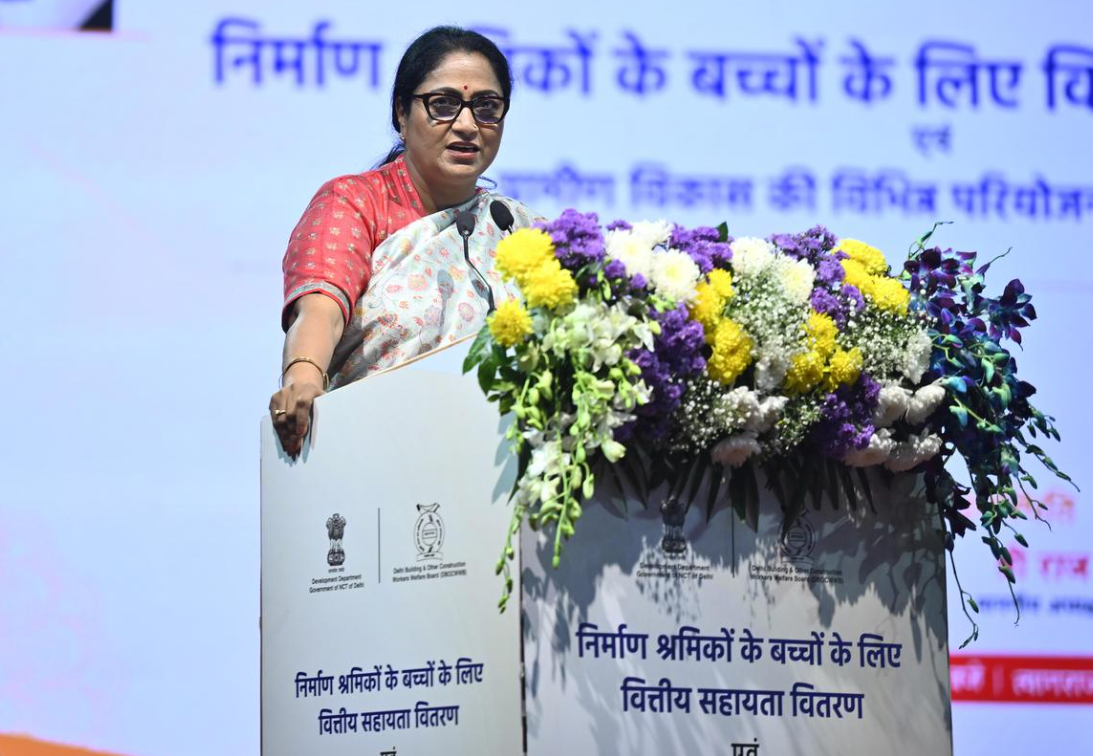
Chief Minister Rekha Gupta on Wednesday launched and laid foundation stones for several Delhi Jal Board projects worth ₹2,158 crore. As a result, the government aims to strengthen water supply and sewage infrastructure across the Capital.
Speaking at Ramlila Ground in Todapur, the Chief Minister said the projects would ensure regular and adequate drinking water. At the same time, she noted that the initiatives would support efforts to clean the Yamuna.
Major Investment in Water Supply Infrastructure
Out of the total project cost, more than ₹1,250 crore has been allocated for water supply works. In particular, the funds will be used to lay new pipelines and upgrade existing networks.
Moreover, the projects will improve water pressure and reduce supply disruptions. As a result, residents in several neighbourhoods will receive more reliable drinking water.
Importantly, public funds are being used for the first time in many areas to meet residents’ basic needs.
Sewage Projects to Support Yamuna Clean-Up
In addition to water supply improvements, the government has prioritised sewage treatment projects. For example, old sewer lines will be repaired and treatment plants will be expanded.
Meanwhile, the Chief Minister said untreated sewage remains a major cause of pollution in the Yamuna. Therefore, improving sewage management has become a key focus.
Consequently, these projects are expected to reduce waste discharge into the river and improve overall water quality.
Relief for Areas with Long-Pending Issues
Several localities have faced water shortages and sewer problems for years. However, many of these issues remained unresolved due to lack of investment.
Now, the new projects aim to provide permanent solutions instead of temporary fixes. In particular, areas such as the Rajinder Nagar Assembly constituency will see focused improvements.
As a result, residents can expect better services and fewer complaints.
Amnesty Scheme for Water Bills Extended
Along with infrastructure upgrades, the Chief Minister announced an extension of the water bill amnesty scheme. Specifically, commercial consumers can now avail of the scheme until August.
This step, she said, will help businesses clear pending dues. At the same time, it will improve revenue collection for the water board.
Therefore, both consumers and the authorities are expected to benefit.
Strengthening Delhi’s Civic Infrastructure
The Delhi Jal Board plays a vital role in managing water supply and sewage treatment. However, aging infrastructure and rising demand have strained existing systems.
To address this, the government has committed to modernising the network. In addition, better planning and monitoring will improve service delivery.
Overall, the focus remains on providing clean water and better sanitation to residents.
Conclusion
The launch of ₹2,158-crore Delhi Jal Board projects marks a major step toward solving the Capital’s water and sewage challenges. Ultimately, the initiatives aim to deliver long-term benefits for residents.
Finally, the Chief Minister said the projects reflect the government’s commitment to public welfare, environmental protection, and sustainable urban development.