

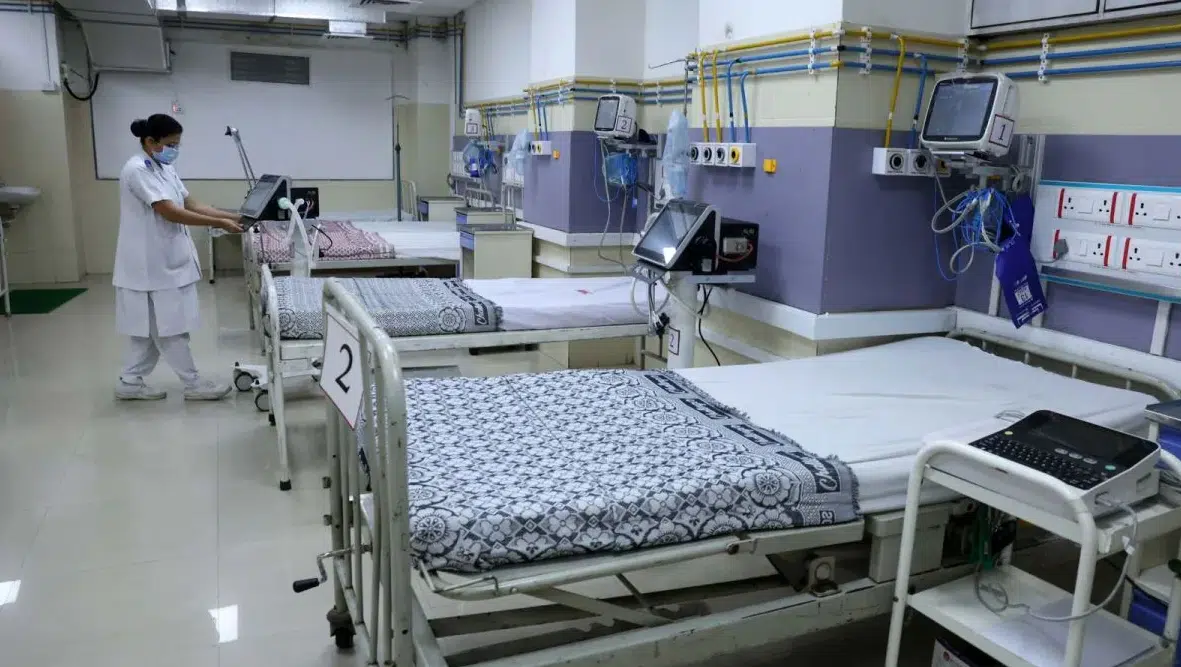
Hospitals across Delhi NCR have welcomed the Union Budget announcement aimed at promoting India as a global medical tourism hub. Finance Minister Nirmala Sitharaman announced a scheme to help states set up five Regional Medical Hubs with private sector support. The move is expected to boost healthcare services and create jobs.
NCR Well Positioned to Gain
Delhi NCR already plays a major role in international healthcare. The region has large corporate hospitals, global airports, and years of experience treating foreign patients. As a result, experts believe it stands to benefit the most from the new policy.
Dr Vinay Aggarwal, senior physician and former president of the Indian Medical Association (IMA), said the announcement could strengthen medical tourism further.
He explained that 20–25 large hospitals in the NCR earn around ₹1,400–1,500 crore each month. Importantly, 7–8% of this revenue comes from overseas patients, making medical tourism a key contributor.
Rising Flow of Overseas Patients
Delhi NCR hospitals handle many complex and high-value treatments. Because of this, patients travel from the Middle East, Africa, South Asia, Central Asia, and CIS countries. Earlier, Bangladesh was also a major source market.
Most international patients come for cancer treatment, organ and kidney transplants, heart procedures, orthopaedic surgeries, and neurosurgical care. Meanwhile, some patients from the United States seek treatments not covered by insurance, such as cosmetic surgery, dental procedures, and hair transplants.
Central Portal Could Improve Access
According to Dr Aggarwal, a centralised digital system could transform medical tourism. It would allow hospitals to present their services on a single platform. Moreover, it would simplify approvals and documentation.
As a result, international patients could compare hospitals easily and make informed decisions.
Hospitals See Strong Growth Potential
Dr Ritu Garg, Chief Growth Officer at Fortis Hospital, said medical tourism depends on clinical excellence, advanced technology, skilled doctors, and transparent pricing.
Fortis attracts patients mainly from the Middle East, Africa, SAARC nations, and CIS countries. These patients usually seek cancer care, organ and bone marrow transplants, and advanced neuroscience treatments.
Similarly, Dr Dharminder Nagar, Managing Director of Paras Hospital, said foreign patients often need life-saving or long-term treatments. Many of these services are either unavailable or too costly in their home countries.
Paras Hospital treats patients from the Middle East, Central Asia, and Africa. In addition, the hospital works with 30–40 international medical travel facilitators. These partners assist with visas, accommodation, language support, and post-treatment care.
Industry Calls Budget Move Timely
Abdul Wajid, Senior Director at Max Healthcare, said the proposal comes at the right time. He added that it could position India as a global destination for medical value travel.
Each year, Max Healthcare treats more than 35,000 international patients from over 145 countries. Most visit for cancer care, organ transplants, heart procedures, neuro surgeries, and orthopaedic treatments.
Meanwhile, Dr Upasana Arora, Managing Director of Yashoda Group of Hospitals, said medical tourism has grown steadily in recent years. She credited this growth to strong infrastructure, skilled doctors, and affordable treatment costs.
Way Forward
With government support and private sector participation, experts believe the Regional Medical Hubs initiative can strengthen India’s global healthcare presence. Therefore, Delhi NCR is likely to remain at the centre of this expansion.